
SQLShift March Update: DB2/MySQL Migration Support, 13 New Migration Paths, and Performance Diagnosis Optimization
 Mar 17, 2026
The SQLShift March update is now officially available. This release expands database migration coverage and improves post-migration performance assurance:
- First-time support for DB2 and MySQL as source databases, with 13 new migration paths
- New stored procedure/function performance diagnosis and optimization for Enterprise edition users
This moves database migration one step further, from simply “getting it migrated” to “getting it migrated well.”
1. Core Features
1) Major Expansion of Database Migration Combinations
This update adds 13 new migration paths at once and introduces DB2 and MySQL as supported source databases for the first time. Powered by SQL dialect abstraction and AI conversion models, SQLShift now covers five major source databases: Oracle, SQL Server, PostgreSQL, MySQL, and DB2, further broadening its cross-database migration coverage.
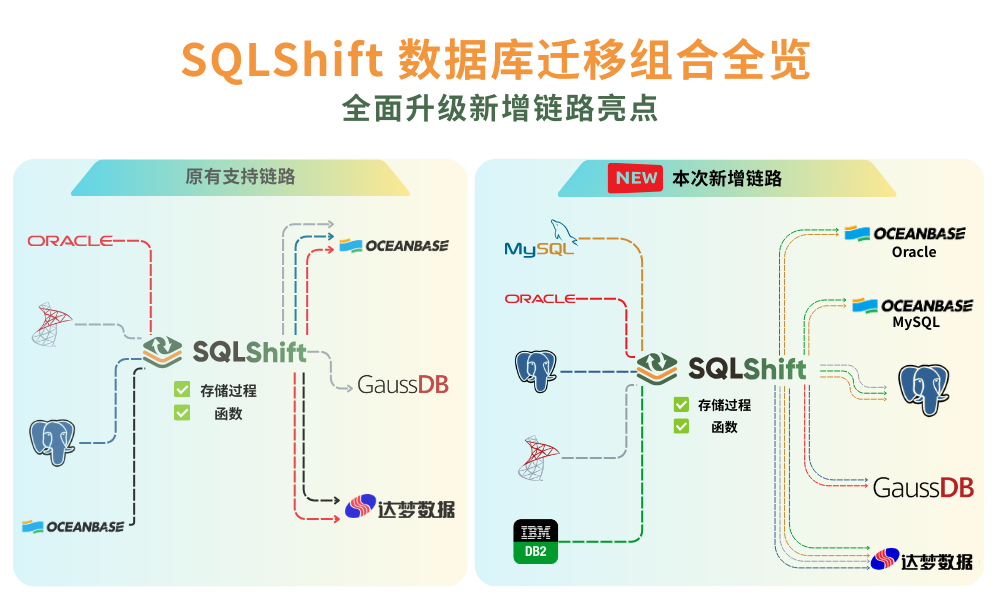
- DB2 migration support is now available: SQLShift now supports migration from DB2 to multiple target databases such as OceanBase and PostgreSQL. It can identify and convert typical DB2 syntax structures including variable declarations and cursor control, reducing adaptation cost for DB2 migrations.
- Expanded MySQL migration combinations: new paths such as MySQL -> OceanBase, PostgreSQL, and Dameng are now supported, covering MySQL migration needs in localization and modernization scenarios.
- More migration combinations added: this release also supplements migration combinations among major databases such as Oracle, SQL Server, and PostgreSQL, further improving cross-database migration capability.
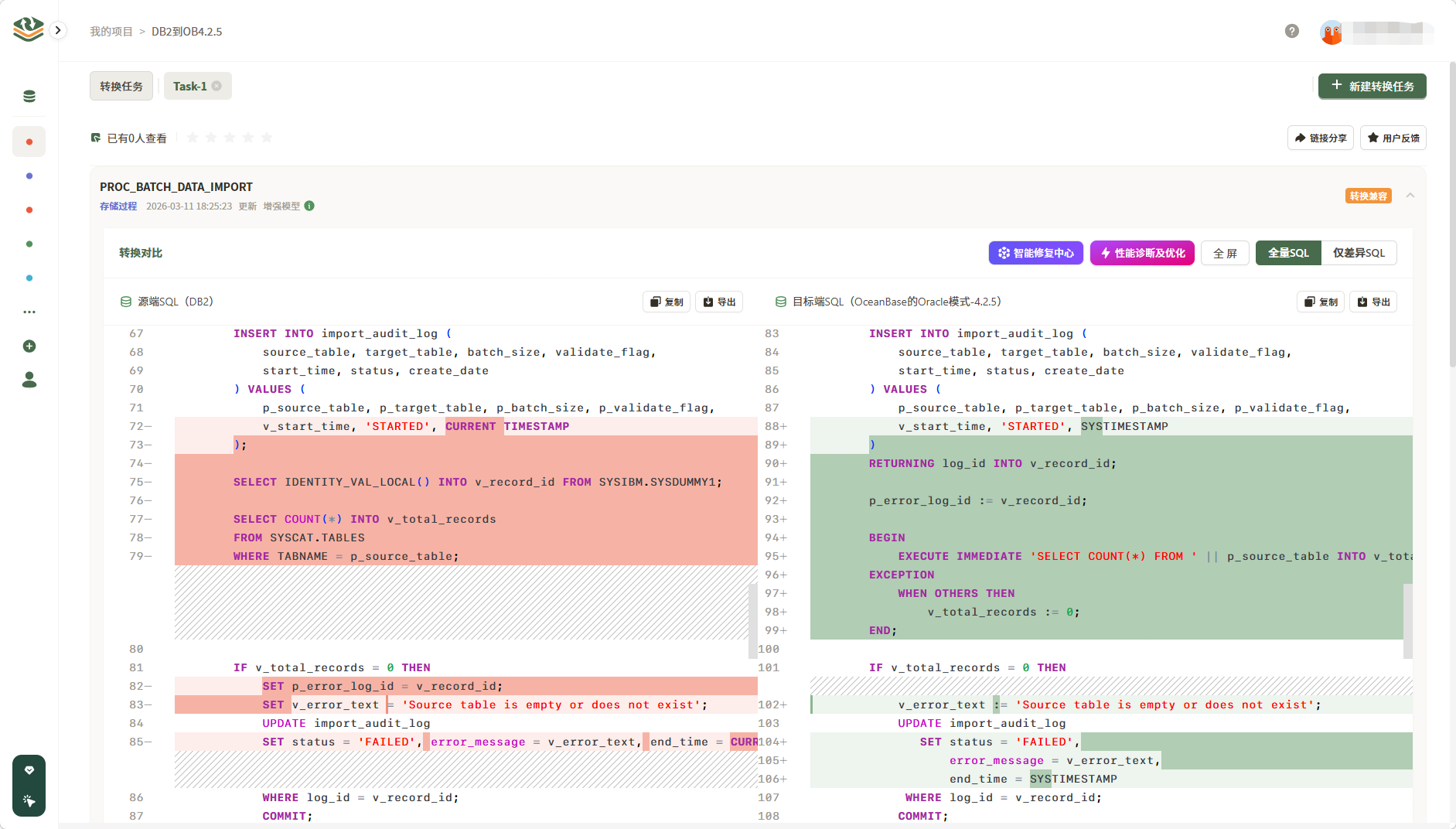
2) Stored Procedure/Function Performance Diagnosis and Optimization
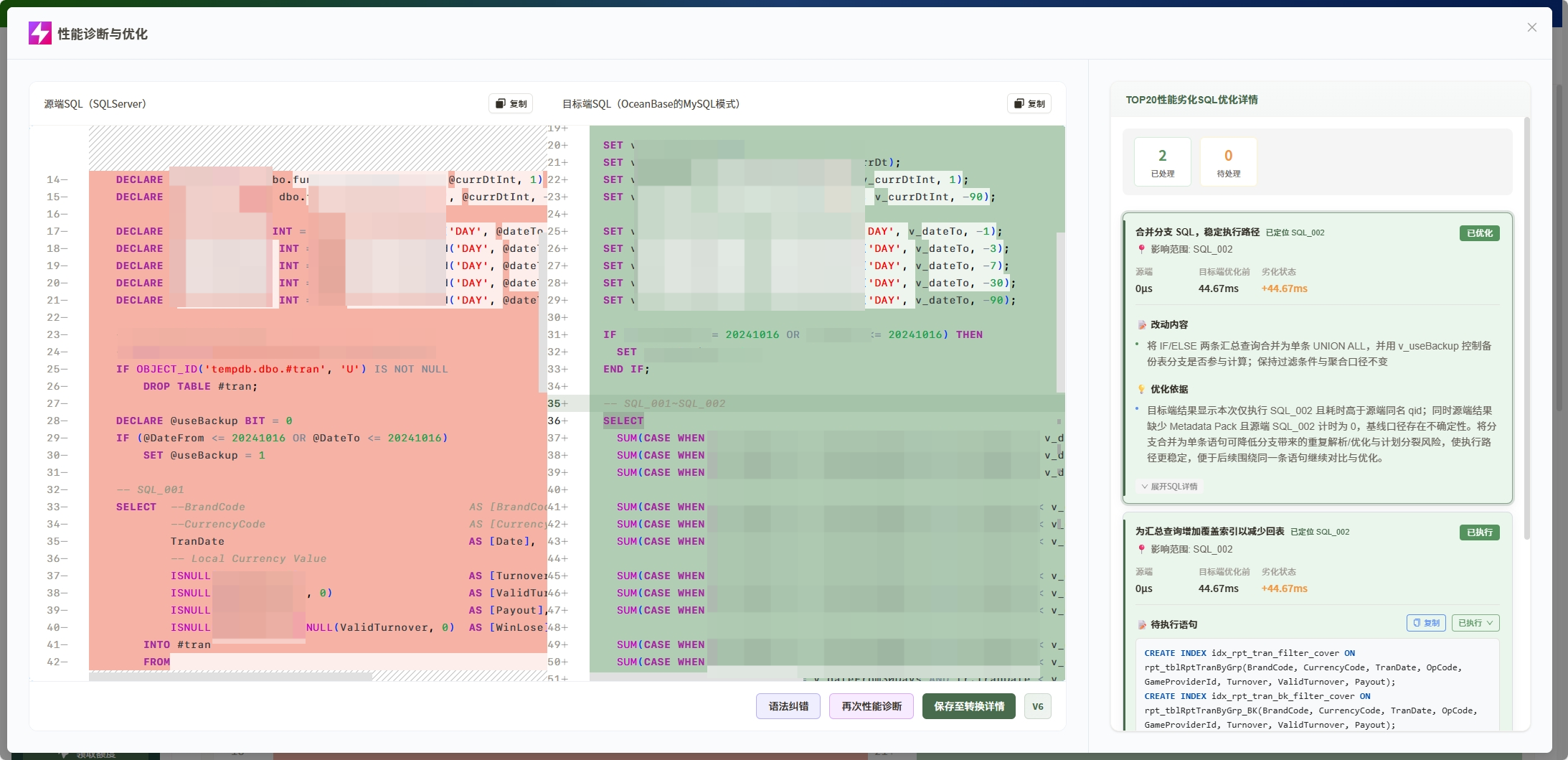
Database migration is not only about “getting it done” but also about “getting it done well.” SQLShift now offers stored procedure performance diagnosis and optimization for Enterprise edition users, shifting performance checks earlier into the migration phase so potential performance issues can be identified and resolved before customer testing begins.
- Early identification of performance degradation: compare execution behavior between source and target during migration to detect degradation in advance.
- Precise bottleneck identification: analyze the execution of each SQL statement inside stored procedures/functions to quickly locate problematic statements.
- Intelligent optimization and rewriting: generate SQL rewrite suggestions based on diagnosis results, reducing DBA effort in manual troubleshooting and refactoring.
- Lower post-migration O&M pressure: identify and optimize potential performance issues during migration, reducing emergency tuning and rework after go-live.
2. Other Updates
Task Filtering and Management Optimization
- The task list now supports compatibility status and task status filters, helping users quickly locate pending work and improving migration project management efficiency.
3. Limited-time Offer
Click here or follow the steps below to claim 30-day stored procedure conversion credits
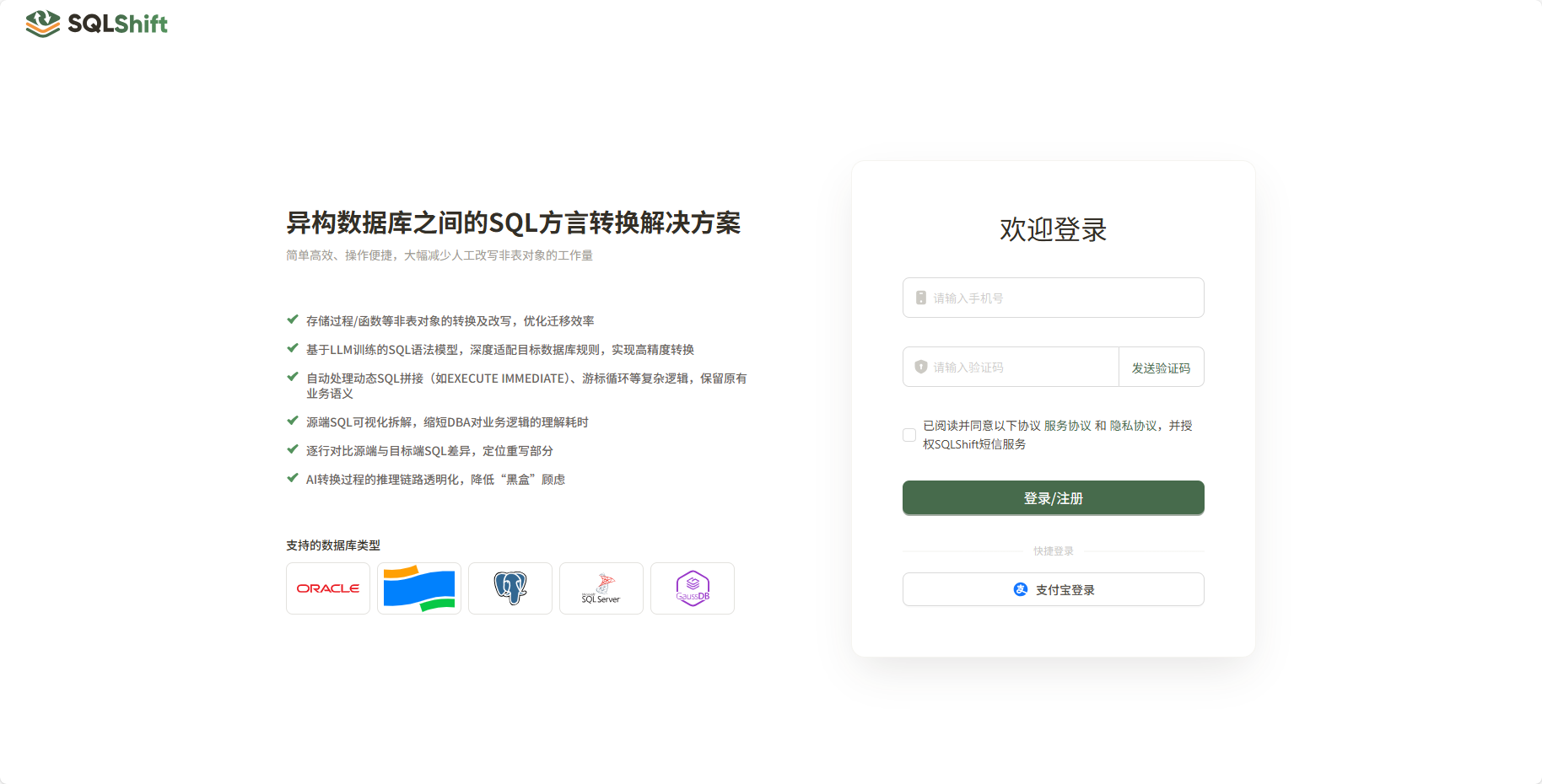
- Click “Free Trial” in the top-right corner, then register and sign in to SQLShift
- After signing in, click “Claim Credits” at the lower-left
- Enter redemption code:
83103ce2-9167-439c-a03c-532c911fb516 - Successfully claim 1000 points, valid for 30 days.
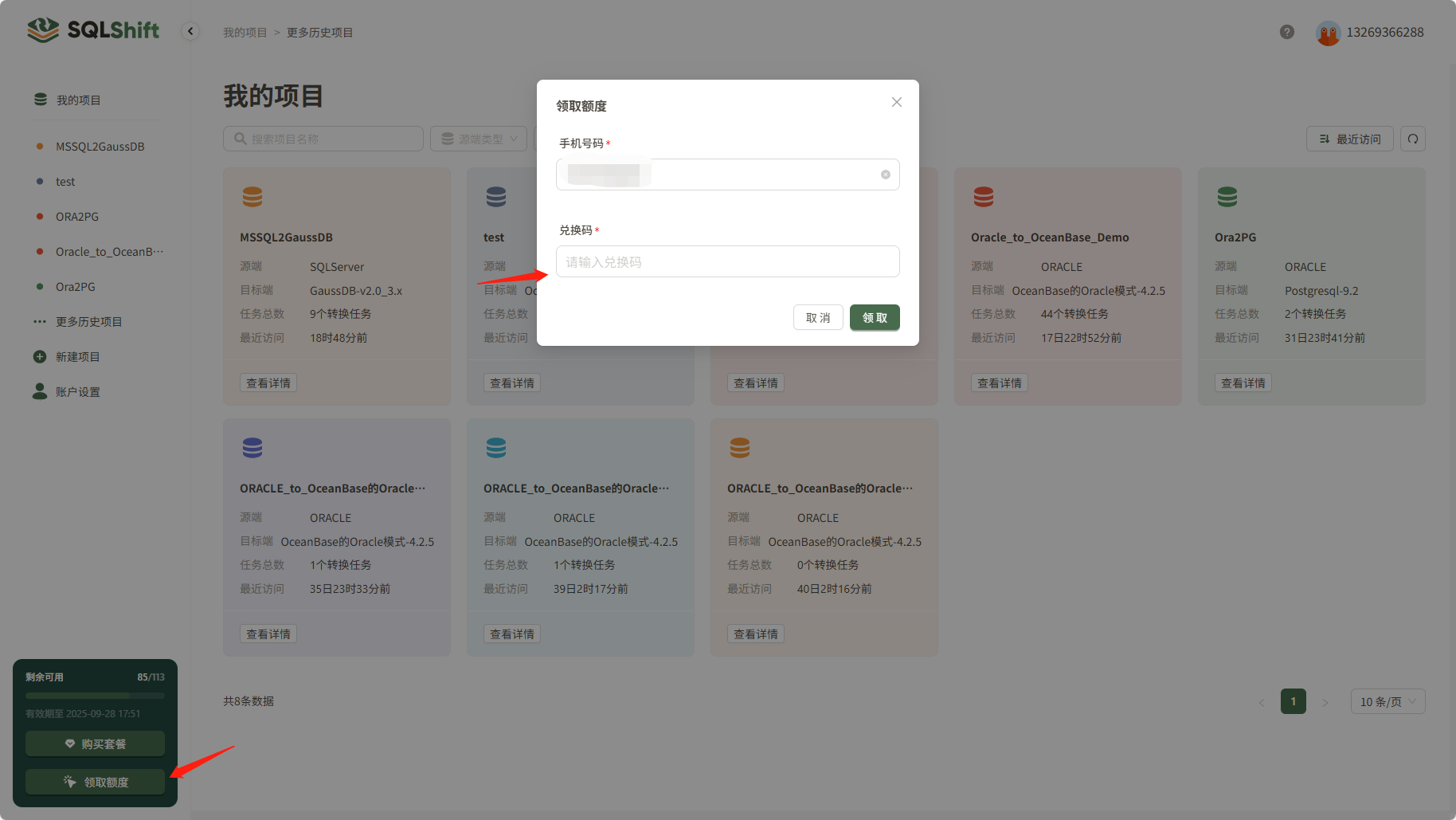
- Enter redemption code: